Come fly
with us
The MIT Flying Club’s primary purpose is to motivate, encourage, and facilitate an affordable, hands-on experience in flying, for everyone from the curious first-timer to the certificated pilot.
Every certificate, in order, with what each one really costs and where the club can help. Hover or tap any exit for the detail.
You look up. That is the whole entry requirement. Nobody in this club started out knowing how any of it worked, and most of us still remember the exact flight that did it.
How the club helps. Come to a Hangar Talk. They are free, open to everyone, and you can turn up knowing nothing at all.
The single most useful hour you can spend is understanding the real numbers, because almost every quoted figure online is the FAA minimum rather than what people actually pay.
How the club helps. We keep a neutral comparison of every flight school near MIT and a full cost breakdown, and members will tell you honestly what they spent.
A short instructional flight where you fly the aircraft yourself. It counts toward your certificate if you carry on, and it is the cheapest way to find out whether you actually love this.
How the club helps. Ask on Slack before you book. Someone has usually flown with that school already.
A physical with an FAA-designated Aviation Medical Examiner. A third class medical covers all private pilot training. Get it early: it is far better to find out about a medical issue before you have spent thousands on lessons.
If you are not a US citizen you must be vetted through the TSA Alien Flight Student Program before flight training begins. This is a real gate, not a formality, and your school has to be an AFSP-registered provider.
How the club helps. We have a whole page on this, and members who have been through it are on Slack.
Applied for through the FAA IACRA system, normally sat down with your instructor. You need it before you can fly solo, so it is worth doing well ahead of that lesson.
Weather, regulations, navigation, aerodynamics, radio work. Self-study, an online course, or an in-person class. This is what the written exam tests, and doing it early makes your flight lessons cheaper because you are not learning theory at $250 an hour.
How the club helps. The club holds navigation materials, aviation books, sectionals and airport directories that members can use.
Part 61 is self-paced and flexible. Part 141 follows an FAA-approved syllabus and can finish in fewer hours. Both produce the same certificate. What matters far more is instructor consistency and how often you can actually fly.
How the club helps. Our comparison table lists fleet, avionics, distance and ratings for every school nearby, with no rankings and no sponsorship.
Your instructor gets out and you fly the aircraft alone. Usually three circuits. It is the moment the whole thing stops being theoretical, and the tradition is that your shirt tail gets cut off afterwards.
How the club helps. Tell us and we will celebrate it. First solos are exactly the sort of thing this club exists for.
Sixty multiple choice questions at an approved testing centre. You need 70 percent to pass. Most people take it once ground school is done and well before the checkride.
An oral exam and a flight test with a Designated Pilot Examiner. Pass, and you can carry passengers, fly across the country, and rent aircraft. This is the certificate most club members are working toward.
How the club helps. Scholarships are real money and most require you to join the sponsoring organisation months before you apply. Start early.
Flying by reference to instruments alone, in the system, in weather that would keep a private pilot on the ground. Widely considered the rating that makes you a genuinely better and safer pilot.
The certificate that lets you be compensated for flying. Requires 250 total hours, plus training in a complex or technically advanced aircraft, which is worth asking schools about early.
Flight instructing is how most professional pilots build the hours to an airline, and it pays while you do it. Adding the instrument instructor rating (CFII) lets you teach instrument students too.
How the club helps. Several of our Hangar Talk guests have been working CFIs. Come and ask them what it is actually like.
The Airline Transport Pilot certificate, required to fly for a scheduled airline. 1,500 hours in the standard case, though a restricted ATP at lower hours is available to graduates of qualifying degree programmes.
MIT Flying Club is open to all student aviation enthusiasts in the Cambridge/Boston area. Join us for informal gatherings to discuss all things aviation, attend lectures and fly-outs, or simply network.
Fly-outs, hangartalks, first solos, and everything in between.
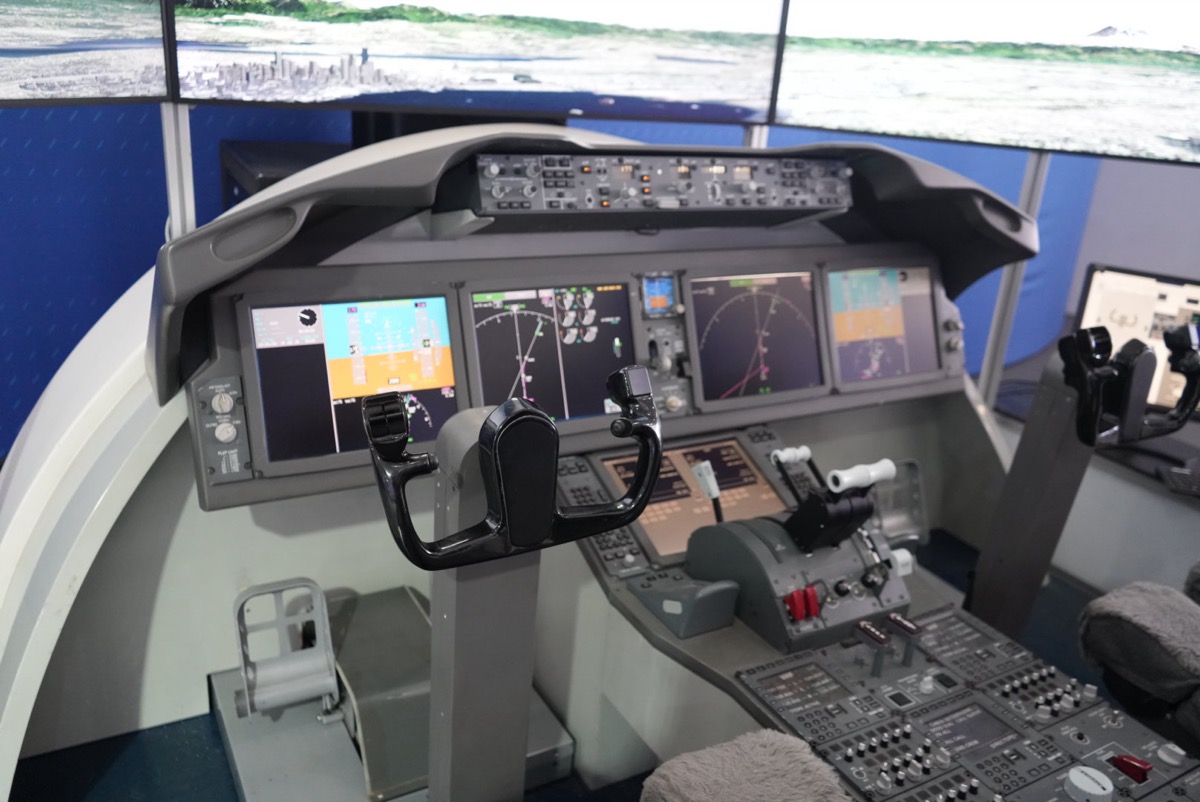
Monthly Hangar Talks with working pilots, simulator nights, and trips out to the airfield. Everything is free and everyone is welcome.
Where club members train, ordered by driving distance. We do not list prices, because we are not endorsing one school over another.
New England's largest
~15 mi25-30 min
Cessna Pilot Center
~20-24 mi30-40 min
Small and personal
~25-27 mi40-50 min
Cirrus Training Center
~26-27 mi35-45 min
Open since 2014
~27 mi~40 min
At KFIT since 1999
~45 mi~60 min